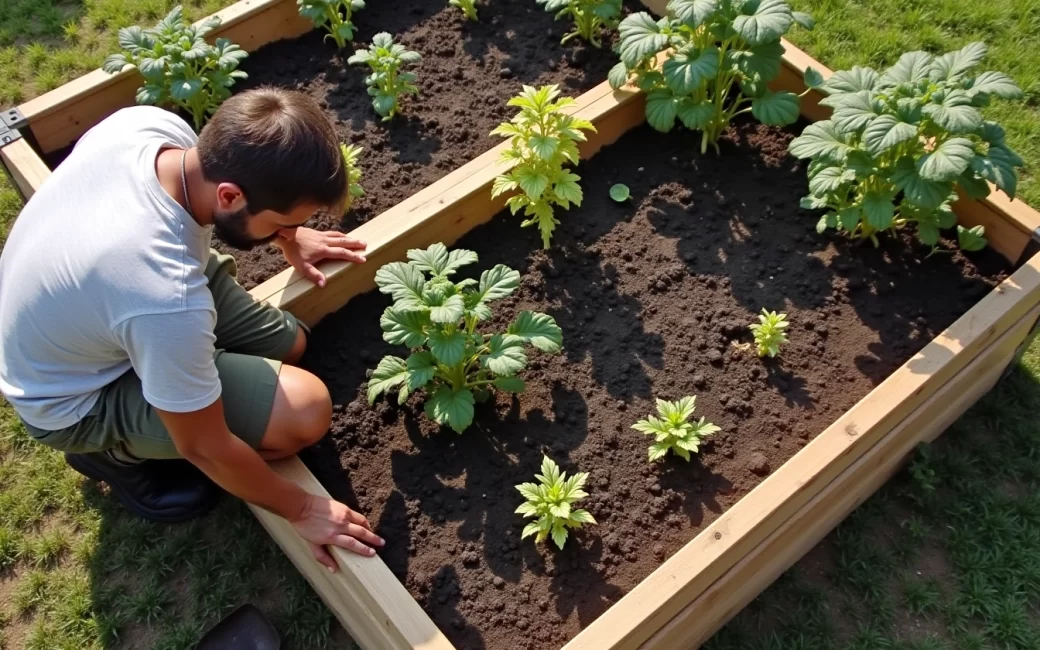
Build or buy: why the cost differs
Buying a kit costs more per square foot of growing space than building from lumber, but the gap narrows once you account for fasteners, corner brackets, and the soil that fills either option. A basic build from untreated pine boards, corner stakes, and deck screws is usually the cheapest route to a single 4-by-8-foot bed, while a cedar or galvanized-steel kit of the same footprint carries the cost of pre-cut, pre-drilled parts and a longer expected lifespan built into the price.
The real cost driver in either case is soil, not the frame. A 4-by-8-foot bed filled to a 12-inch depth needs roughly 32 cubic feet of growing medium — the USDA's raised bed guidance notes that a quality blend of topsoil, compost, and an aeration material like perlite or coarse sand is what actually supports root growth, not the wall material. Once a bed exceeds about 18 inches in depth or width doubles, the volume of soil needed rises faster than the cost of the frame around it, which is why very deep or very large beds tend to favor a cheaper frame (untreated wood, concrete block) with the savings redirected into soil.
The practical way to compare:
- Frame cost: lumber and fasteners for a DIY build vs. the flat price of a kit of the same dimensions
- Soil cost: identical for both, and it scales with volume, not with what the walls are made from
- Lifespan cost: a frame that rots or rusts in a few seasons has to be rebuilt, so its real cost is the price divided by years of service, not the purchase price alone
Buying makes more sense when the reader wants square corners without cutting lumber, needs a material like galvanized steel that is harder to source and cut at home, or is working somewhere DIY isn't practical, such as a rental. Building makes sense when the goal is a large or irregular footprint, since board lumber scales in cost roughly with length, while most kits are sold in fixed, standard sizes.
Why raise the bed at all
A raised bed is worth building when the ground beneath it is compacted, poorly drained, or contains contaminants that make direct planting risky. Vegetable roots need loose, aerated soil to develop, and compacted clay or fill dirt around a new-build house often can't provide that no matter how much it's amended in place.
The University of Florida's Gardening Solutions program points out that raising the growing surface above grade solves several of these problems at once: it improves drainage because water isn't perched on a hardpan layer, it warms up faster in spring because the soil mass is smaller and sits above cold ground, and it lets a gardener bring in a soil blend suited to vegetables instead of trying to rebuild native soil chemistry from scratch. Where lead or other soil contaminants are a concern — common on urban lots or near old structures — a lined, raised bed filled with imported soil separates food crops from the ground entirely, which is not something soil amendment alone can do.
If the native soil is already loose, well-drained, and untested for contamination, a raised bed adds cost without adding much benefit. The decision to raise a bed should follow from a real problem with the ground, not from habit.
Bed width, walking paths, and why beds get compacted anyway
A bed built wider than about 4 feet forces the gardener to step into the soil to reach the middle, and that single habit undoes most of the drainage benefit a raised bed is built to provide. Soil compacted by footsteps loses the pore space roots need, and in a raised bed — where the whole point was loose, uncompacted soil — that compaction happens in exactly the area a gardener touches most.
The fix is dimensional, not material: keep bed width to roughly 4 feet if it can be reached from both sides, or about 2 feet if it's only reachable from one side (against a fence or wall, for instance). Reach distance, not bed length, is the limiting factor — a bed can run 20 feet long and still be worked entirely from the paths as long as no point is more than about 2 feet from an edge.
Paths between beds need their own minimum width: enough for a kneeling gardener to pass another, and wide enough for a wheelbarrow if soil, mulch, or compost will ever be delivered by one. A path under about 18 inches turns into a single-file squeeze the first time two beds need topping up in the same afternoon. Getting both numbers right — reachable width and passable path — is what keeps a raised bed's soil loose for the life of the bed, rather than for its first season.
What goes on the bottom, and why it isn't one layer
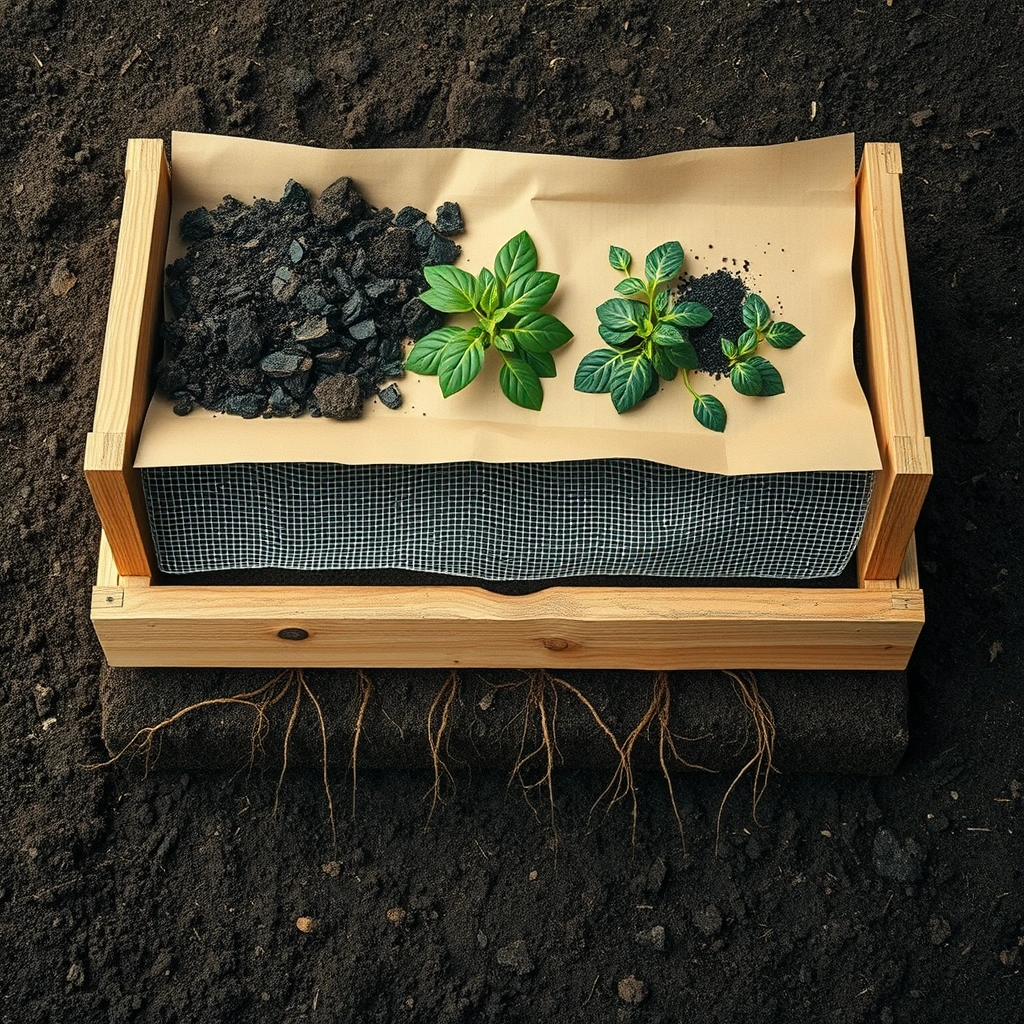
The bottom of an open raised bed does three separate jobs, and each one needs a different material — treating it as a single "bottom layer" is why beds end up with weeds pushing through or voles tunneling in from underneath. Confusing the three jobs is the most common reason a bed that looked finished stops looking finished by midsummer.
- Smother existing turf and weeds — flattened cardboard or several sheets of newspaper laid directly on the grass block light and break down over a season, without blocking drainage the way plastic sheeting would.
- Exclude burrowing animals — hardware cloth (metal mesh) stapled across the bed's base keeps voles, gophers, and moles from tunneling up into the soil from below; cardboard alone does nothing against this.
- Fill bulk volume cheaply in a deep bed — coarse organic material such as untreated branches or partially composted yard waste can occupy the lower few inches of a very deep bed so that finished soil mix is only needed near the surface, where roots actually grow.
These layers stack in that order — cardboard against the ground, hardware cloth over or under it depending on whether the concern is weeds or animals, then bulk filler, then the finished soil blend on top. A bed that skips the hardware cloth in an area with burrowing rodents will lose plants to tunneling no matter how good the soil mix above it is; a bed that skips the cardboard will fight perennial grass runners for a full season.
Elevated beds: accessibility bought with soil depth
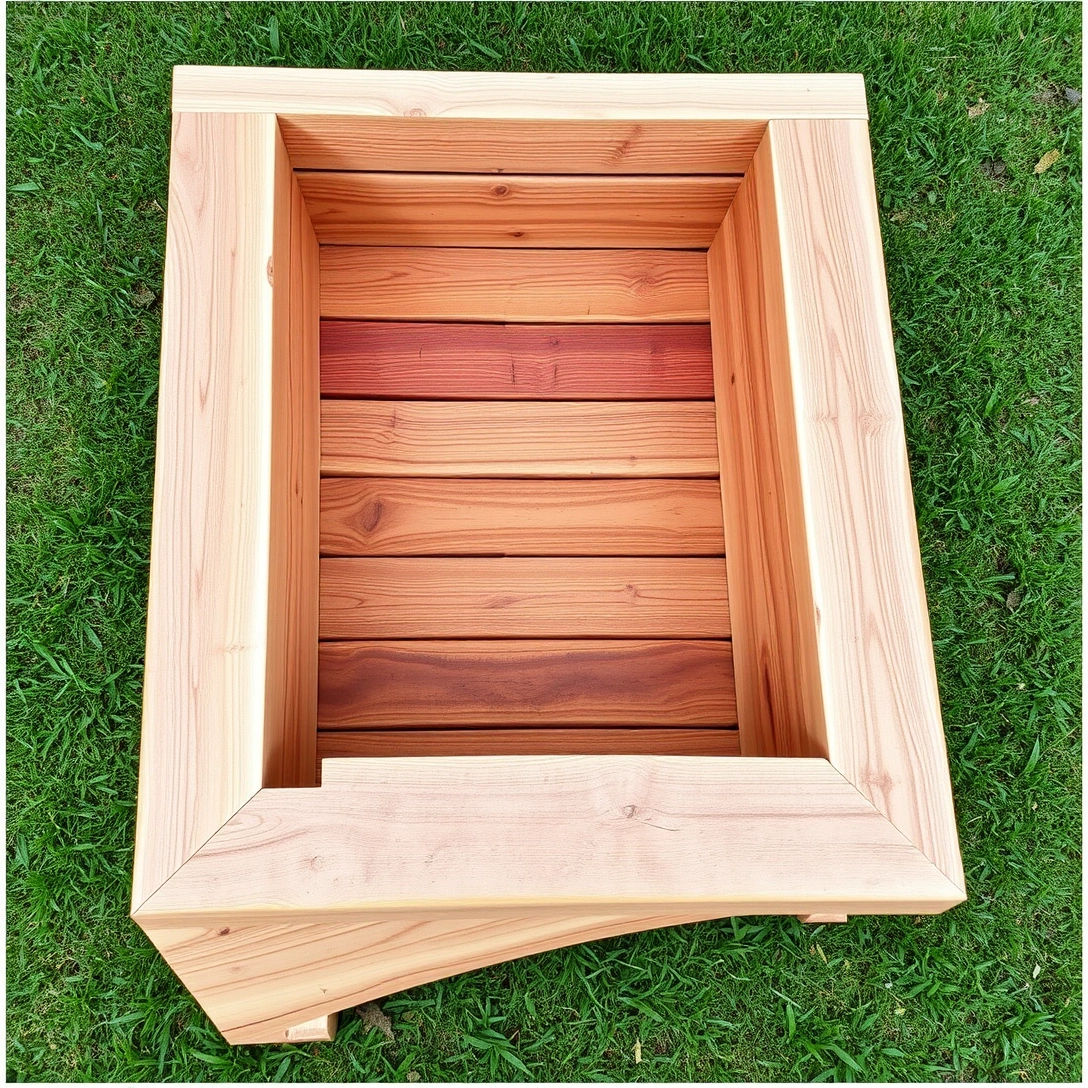
An elevated planter on legs solves a problem no ground-contact raised bed can: it puts the growing surface at waist height for a gardener who can't kneel or bend, or it creates growing space where there is no soil at all, such as a balcony or paved courtyard. The trade-off is depth — elevated planters are almost always shallower than an in-ground raised bed, because a deeper box at that height becomes heavy, expensive to fill, and structurally harder to support on legs.
That shallower depth rules out deep-taprooted crops before soil quality even enters the discussion. Carrots, parsnips, and other long-taprooted vegetables need more depth than most elevated planters offer, while shallow-rooted crops — lettuce, herbs, most greens, and bush-type crops with a compact root system — perform fine in the same space. Anyone choosing an elevated bed for accessibility is really choosing a crop list at the same time, and it's worth deciding the crop list first.
Elevated beds are also closed-bottomed by design, unlike ground-contact raised beds. That means drainage depends entirely on holes drilled or built into the base, not on the surrounding soil absorbing excess water, so the growing mix needs to drain more freely than a bed sitting on open ground would require.
Material comparison: what the sides are made from
The wall material decides how long a bed lasts in soil contact, how much it weighs, and how it fails — rot, rust, or cracking — which is the real basis for comparing cost against lifespan.
| Material | How it fails | Typical lifespan pattern | Notes |
|---|---|---|---|
| Cedar / rot-resistant wood | Slow rot at soil-contact points | Longer than standard pine, still finite | Untreated pine rots fastest; cedar's natural oils slow decay |
| Recycled plastic / composite | Doesn't rot or rust; can become brittle with UV exposure over time | Long, largely maintenance-free | Heavier upfront cost, no yearly sealing needed |
| Metal (galvanized steel) | Rust once the zinc coating is scratched or worn through | Long if coating stays intact | Absorbs and radiates heat, warming soil faster in spring and potentially overheating roots in summer |
| Masonry (stone, brick, block) | Doesn't rot or rust; mortar joints can crack with freeze-thaw | Effectively permanent once built | Highest upfront labor and material cost, no annual maintenance |
Wood remains common because it's inexpensive and easy to cut to custom dimensions on site, but it's also the material most likely to need replacement within a garden's working life. Metal and plastic trade a higher purchase price for fewer replacement cycles. Masonry sits at the far end of that trade: expensive and permanent, appropriate for a bed that won't be moved or resized.
What not to plant in a raised bed
Bed depth and footprint — not soil fertility — are what rule certain plants out of a raised bed, even a well-built one. Three categories cause the most trouble:
- Deep-taprooted vegetables in a shallow bed: crops that send a long central root down, such as carrots or parsnips, need more depth than many beds provide, especially elevated planters; a stunted or forked root is usually a depth problem, not a soil-quality one.
- Aggressive spreaders like mint: mint and similar rhizomatous herbs spread by underground runners and will cross into neighboring beds or push through gaps at the base of an open-bottomed frame; if it's grown at all, it's usually confined to its own container within the bed.
- Large perennial or sprawling plants: anything that eventually needs several feet of lateral space — sprawling squash, mature perennial shrubs, or bramble fruit — outgrows the footprint of a bed sized for annual vegetables and shades everything planted near it.
None of these plants are wrong for raised bed gardening in general; they're wrong for the dimensions of a specific bed. A deeper bed solves the taproot problem, a physical barrier or a dedicated container solves the mint problem, and simply not putting a sprawling plant in a shared bed solves the third.
Orientation, sunlight, and bed height together
A raised bed's height and its orientation to the sun interact, and getting the pairing wrong shades one bed with another before either was planted with anything tall. A bed running east-west casts its longest shadow to the north, so in the northern hemisphere a taller bed — or a bed with a trellis added to it — belongs on the north side of a row of beds, not the south, or it will shade every shorter bed behind it for part of the day.
The same logic applies to trellises added to a single bed for vining crops like cucumbers or pole beans: place the trellis on the north edge of the bed itself so the vertical growth doesn't fall across the shorter plants sharing that same box. Most vegetables need close to full sun, so the University of Florida's raised bed guidance treats siting for sun exposure as a starting condition to check before a bed is built, not something to correct afterward by moving plants around within it.
Where a garden has only one realistic orientation available, the height and trellis decisions should follow from that constraint rather than fight it: a shorter bed or one without a vertical trellis on the shaded side of a taller structure will still produce, just with a shorter list of crops suited to partial sun.
Measure the site's reach distance, path width, and sun pattern before choosing a size or a material — those three numbers, more than any product decision, determine whether the bed built or bought this season is still worth using next season.