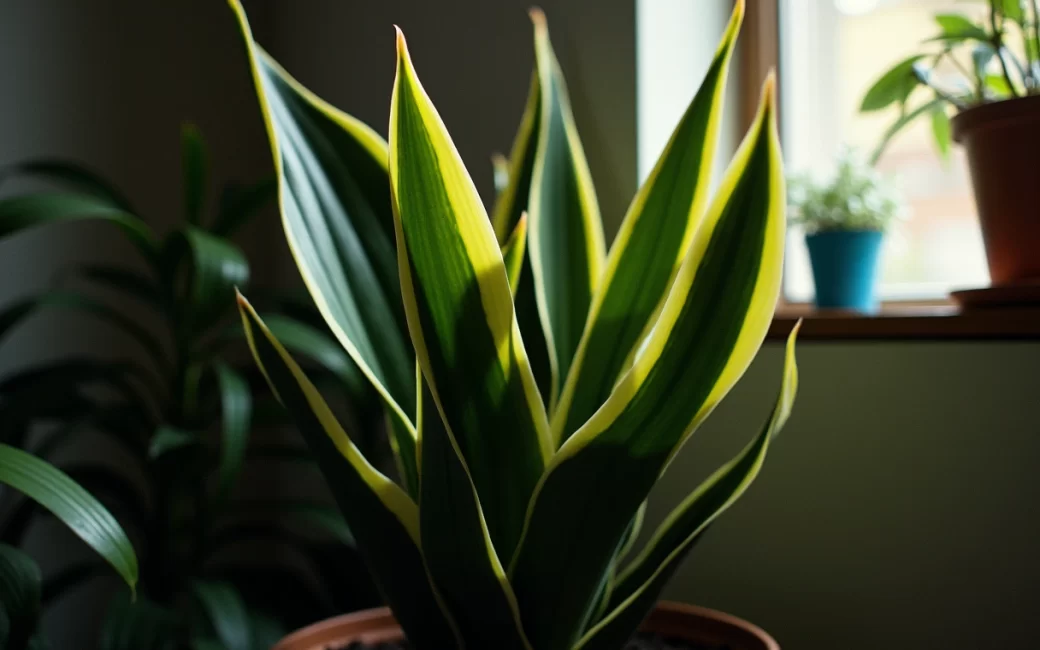
Room gets little natural light
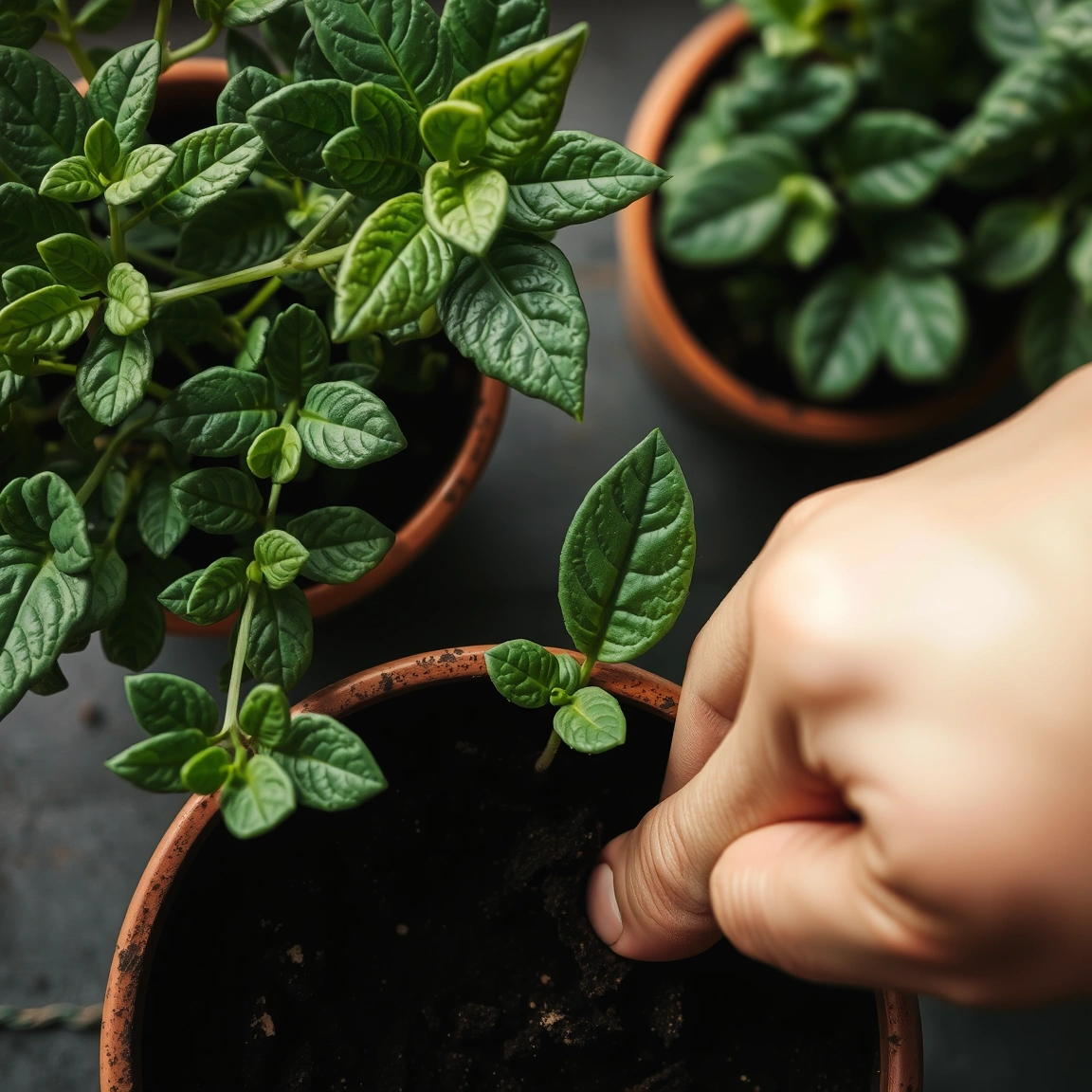
A plant sited by a north-facing wall or deep in an interior room is working with whatever light bounces off adjacent surfaces, not with direct sun. If the plant placed there needs bright indirect light, it will often keep growing for a while before showing stress — new leaves come in smaller, stems stretch toward the nearest window, and older leaves pale or drop one at a time.
The fix is not usually more water. It's matching species to the light that's actually there: a snake plant is one of the few common houseplants that tolerates low light for extended periods, so it can stay in a dim corner where a fern or a fiddle-leaf fig would decline. The alternative is moving the plant itself nearer a window rather than changing how it's watered — light mismatch is the first thing to rule out, because the leaf symptoms it produces (slow growth, pale new leaves, leggy stems) are easy to mistake for a watering problem and treating them as one won't help.
Watering on a fixed schedule rather than by soil condition
A calendar-based routine — water every Sunday, say — ignores that soil dries at different rates depending on pot material, drainage, humidity and season. The result is often a pot that stays wet for days after a scheduled watering because the mix or container doesn't drain, even though the schedule itself looked reasonable on paper.
Soggy soil shows up as yellowing leaves that feel soft rather than crisp, a drooping that doesn't recover after watering, and sometimes a sour smell from the potting mix. The way to avoid it is to check the soil before adding water rather than by the day of the week — pushing a finger an inch or two into the mix, or lifting the pot to feel its weight, tells you more than a schedule does. Pairing that check with a pot that has a drainage hole and a mix that doesn't compact solves most of the problem at the source, rather than correcting for it after the leaves have already turned.
Beginner wants plants but has irregular care habits
Someone who travels often, forgets watering days, or simply wants a plant without building a routine around it is better served by choosing from the low-maintenance end of the houseplant range than by picking something that demands consistency. Species repeatedly flagged as forgiving of missed waterings and low light include the snake plant and similar tolerant species, which store water in thick leaves or rhizomes and can go longer between waterings than thinner-leaved plants.
The selection rule that matters here is simpler than any specific list: pick a species whose tolerance for neglect is already documented, rather than a plant chosen for appearance that then has to be propped up with a strict routine. A plant that survives irregular watering and a dim windowsill removes the need for the routine altogether, which is the actual goal for a beginner who isn't going to build one.
Plant chosen for how it looks in a space
Choosing a plant for how it reads in a room — tall and architectural by a sofa, trailing from a shelf, a cluster of small pots on a windowsill — is a legitimate starting point, but the space dictates the light and humidity on offer whether or not that was part of the decision. A large leafy plant picked to fill a corner that happens to be the dimmest spot in the room is a design choice and a care problem at the same time.
Reconciling the two means working backward from the spot's actual conditions once the design role is decided: if the intended spot is low-light, the design pick needs to come from low-light-tolerant species rather than from whatever looks best in photos, and if a tree-form plant is wanted for height, its mature size needs to fit the floor space and the ceiling clearance rather than just the gap in a layout. Design-led placement guidance that starts from room type still has to be checked against what that room type usually offers in daylight before the plant goes in, not after.
Houseplant
A houseplant is any species grown indoors rather than in open ground, selected for how it tolerates the light, humidity and temperature range of an interior rather than for hardiness outdoors. That single shift — from garden conditions to room conditions — is why the same species can thrive on one windowsill and fail on another a few metres away with less light.
Because houseplants are drawn from many different native climates (tropical understory plants, succulents, epiphytes), there's no single care routine that applies across the category. What generally transfers is the logic rather than the specifics: check the light a spot actually gets, check the soil before watering, and choose a species whose native habitat resembles the room it's going into.
Snake plant
The snake plant (Dracaena trifasciata, formerly Sansevieria) is named across houseplant guidance more often than almost any other species as the default recommendation for low light and infrequent watering, which is why it keeps appearing in beginner and low-maintenance lists. Its thick, upright leaves store water, which is what lets it go for extended stretches without watering without the stress symptoms that thinner-leaved plants show under the same treatment.
It isn't suited to every situation, though — it's toxic if chewed by pets or children, a filter worth applying before choosing any "easy" plant for a household with either. For a spot with little natural light and an owner who won't water on a strict schedule, it remains one of the more forgiving choices among common houseplants.
Light exposure
Light exposure is the amount and quality of light a spot receives through the day, and it's the variable most houseplant problems trace back to before soil or water are even checked. Two rooms that look similarly bright to the eye can differ enormously in what a plant experiences, because a human eye adjusts for brightness in a way a plant's growth doesn't.
A rough way to read a spot without equipment: hold a hand about a foot above the soil surface around midday. A sharp, distinct shadow means strong direct or bright light; a soft, fuzzy shadow means moderate indirect light; no visible shadow at all means the spot is low light regardless of how bright it looks to the eye. That test is a better starting point than guessing from a room's general appearance, because window direction, obstruction from buildings or trees, and glass tinting all change what reaches the plant.
Bright indirect light
Bright indirect light is the level named as the default requirement for most common houseplants — pothos, monstera, most ferns, peace lilies — and it means light that's strong but not direct sun hitting the leaves. In practice it's usually a spot a few feet back from an unobstructed window, or right beside a window that doesn't get direct sun for more than an hour or two.
The distinction that matters for plant health is between bright indirect light and either direct sun (which can scorch leaves on species not adapted to it) or low light (which is dimmer still and only a smaller group of species tolerate it long-term). A plant moved from a nursery's shaded bright-light growing conditions straight into a south-facing windowsill with hours of direct sun can scorch within days, which is why acclimating a new plant gradually to a brighter spot than it came from is worth doing in the first few weeks rather than placing it in its final spot immediately.
Low-light tolerance
Low-light tolerance is the trait that lets a smaller group of species survive, rather than merely persist briefly, in rooms with little natural light — north-facing rooms, interior spots away from windows, offices lit mainly by overhead fixtures. It isn't the same as a plant preferring low light; most low-light-tolerant species still grow faster and look fuller in brighter conditions, they simply don't decline the way most houseplants would in a dim spot.
Snake plant, ZZ plant and pothos are commonly grouped under this trait because they continue producing new leaves, if slowly, in conditions that would cause pale, dropping leaves and stretched stems in a plant without that tolerance. Choosing from this group is the direct fix for a genuinely low-light spot, rather than relying on supplemental care to compensate for light the room doesn't have.
Watering routine
A watering routine is less about frequency on a calendar and more about responding to how fast a specific pot dries out, which depends on pot material, drainage, potting mix, humidity and the season. A terracotta pot in a dry, heated room in winter dries faster than a plastic pot in a humid bathroom, even with an identical plant in both.
The practical routine that holds up across species is: check the soil before watering rather than on a fixed day, water thoroughly until it drains from the bottom of the pot, then let the top portion of the mix dry out again before the next watering for most common houseplants. Species that store water — succulents, snake plant — need longer dry spells between waterings than thin-leaved tropical foliage plants, which is the main reason a single schedule across a mixed plant collection rarely works for all of them.
Overwatering
Overwatering is watering more often, or in greater volume, than a plant's roots and the pot's drainage can process, and it's the more common failure mode among beginners because more water feels like more care. The visible signs are often soft, yellowing leaves, a drooping that doesn't firm up after watering, and in more advanced cases a sour smell or visible mould on the soil surface.
What distinguishes it from underwatering when the leaves look similar is the soil and the roots themselves: overwatered soil is wet or waterlogged when checked by finger a few centimetres down, the pot feels heavy, and leaves that have yellowed tend to feel soft or mushy rather than crisp. Roots affected by overwatering, if checked at the next repotting, are often dark and soft rather than firm and pale. Improving drainage — a pot with a drainage hole, a chunkier mix, removing a decorative outer pot that's trapping water against the inner nursery pot — addresses the cause rather than just spacing out waterings further.
Underwatering
Underwatering is giving a plant less water, or less often, than its roots need to stay hydrated, and it produces leaf symptoms that overlap with overwatering enough to confuse the two: yellowing, dropping leaves, a general wilted look. The soil and leaf texture are what separate them.
Underwatered soil is dry and pulls away from the pot's edge when checked by finger, the pot feels noticeably light when lifted, and leaves that have yellowed or browned tend to feel dry, crisp or crumbly rather than soft. Some plants also show curling or crisping at the leaf edges specifically, which overwatered leaves rarely do. The fix is a thorough watering until it runs from the drainage hole, followed by a return to checking soil moisture before the next one, rather than assuming the plant needs water on the same day it last looked wilted — thirsty plants often perk up within hours of a proper soak, which is itself a useful way to confirm the diagnosis before changing the longer-term routine.
Check the actual light in the spot you have, test the soil before you water, and pick a species whose tolerance for both already matches that spot rather than hoping care will close the gap.